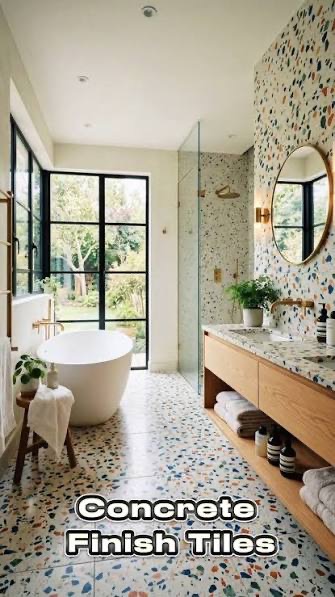
A bathroom can be practical and still feel beautiful. In fact, the best bathrooms are usually both. They handle steam, water, daily routines, rushed mornings, and quiet evenings — but they also give you a moment to breathe.
That is why the floor inside a shower matters more than many people think.
A marble shower floor tile is not just a surface you stand on. It changes how the whole shower feels. It can make the room look softer, more refined, more expensive, and more carefully designed. It brings natural texture underfoot. It connects the shower to the rest of the bathroom. And when chosen properly, it can offer both elegance and function.
People often focus on vanity units, mirrors, taps, and wall tiles first. Those are important, of course. But the shower floor is where design becomes physical. You see it, yes — but you also feel it every day.
That is the quiet power of marble.
Why Marble Works So Well on Shower Floors
Marble has a natural beauty that manufactured materials often try to copy. The soft veining, subtle color shifts, and organic movement give each piece its own personality. This is especially valuable in a bathroom, where too many hard, flat surfaces can make the space feel cold.
A marble shower floor tile adds warmth without needing bold color. It can be pale and peaceful, dramatic and moody, or classic and elegant. White marble with grey veining creates a clean spa-like look. Warmer cream or beige marble can make the shower feel softer and more inviting. Dark marble brings a boutique hotel atmosphere.
But marble is not only about appearance.
For shower floors, smaller tile formats are often preferred because they follow the slope of the floor more easily. A shower floor needs to drain properly. Large tiles can be harder to install neatly on a sloped surface, especially in smaller showers. Mosaic marble pieces, however, are more flexible. They allow the installer to create a smooth fall toward the drain.
That is one reason mosaic marble is so popular in shower areas.
The Role of Mosaic Tile in a Shower Floor
When people search for marble mosaic tile for sale, they are often looking for something decorative. But mosaic tile is not only about pattern. It is also practical.
Small mosaic pieces create more grout lines. On a shower floor, this can help with grip. A highly polished large tile may look glamorous, but it can feel slippery when wet. A mosaic layout, especially in a honed finish, can feel more secure underfoot.
This does not mean every mosaic tile is automatically suitable for every shower. Finish, installation, sealing, grout, and maintenance all matter. Still, mosaic marble has a real advantage in wet areas because it combines beauty with usability.
Imagine stepping into a shower where the walls are simple, the glass is clean, the fixtures are brushed nickel, and the floor is a soft white marble mosaic. It feels deliberate. Not overdesigned. Not cold. Just calm and complete.
A designer might say, “The shower floor is the anchor. If it looks right, the whole shower feels right.”
That is a very practical truth.
Choosing the Best Shape for Marble Shower Floor Tile
Shape changes the personality of marble.
A hexagon mosaic feels clean and timeless. It works well in both modern and traditional bathrooms. Small hexagons create a gentle pattern without becoming too busy.
A basketweave pattern has a more classic, almost European look. It can make a bathroom feel elegant and established, especially when paired with a vanity, framed mirror, and traditional fixtures.
Herringbone is more energetic. It introduces movement and direction. On a shower floor, herringbone can look stylish, but it should be used carefully because marble already has natural veining. Too much movement can overwhelm a small space.
Penny round marble feels softer and more decorative. It can suit a relaxed bathroom, a guest bath, or a design that wants a slightly vintage character.
A square mosaic is simple, clean, and flexible. It lets the marble itself become the main feature rather than the pattern.
The best choice depends on the size of the shower, the veining of the stone, and the style of the room. A bold marble in a complex pattern can be too much. A subtle marble in a simple shape can look incredibly refined.
Honed or Polished Marble: Which Is Better for a Shower Floor?
For a marble shower floor tile, honed marble is usually the more practical choice. Honed marble has a matte or satin finish. It feels softer, less reflective, and often more natural.
Polished marble reflects light beautifully, but on a wet shower floor it may not always be ideal. It can feel more slippery, and it may show wear differently over time. Polished finishes can still work beautifully on shower walls or as a marble backsplash tile, but the floor has different needs.
This is one of the most important distinctions in bathroom design.
Walls are mainly visual. Floors are visual and physical.
You walk on them. You clean them. They handle water directly. They need comfort, safety, and durability.
A honed marble mosaic offers a more grounded, spa-like finish. It also tends to suit natural bathrooms with wood tones, warm lighting, stone counters, and soft neutral palettes.
How Marble Shower Floors Change the Mood of a Bathroom
Bathrooms can easily become too clinical. White walls, glass panels, chrome fixtures, bright lights — everything may be clean, but not necessarily warm.
Marble helps solve that problem.
A marble shower floor tile introduces natural irregularity. The veining breaks up the plainness. The stone gives the shower a sense of depth. Even when the color palette is simple, the room does not feel empty.
For example, take a bathroom with large-format white wall tiles. It is practical, bright, and easy to maintain. But it may feel a little flat. Add a marble mosaic shower floor, and the whole room changes. Suddenly there is texture. There is craftsmanship. There is a focal point that does not shout.
That is what good material selection does. It adds interest without adding clutter.
Marble Shower Floor Tile and Wall Tile Combinations
One of the smartest ways to design a shower is to combine larger wall tiles with smaller floor mosaics.
Large wall tiles reduce grout lines and create a calm visual field. The shower feels open and clean. Then the mosaic floor adds detail and function where it is needed most.
This combination works especially well with marble. You might choose large marble tiles for the shower walls and a matching or coordinating mosaic for the floor. Or you might use porcelain or ceramic walls with a real marble floor for a more budget-conscious design.
The second option can be very effective.
For instance, a homeowner may choose soft off-white wall tiles, a walnut vanity, matte black fixtures, and a marble mosaic shower floor. The marble becomes the luxury detail. It does not have to cover every surface to make an impact.
Sometimes one carefully chosen material is enough.
Using Marble Beyond the Shower Floor
A bathroom feels more professional when materials repeat in subtle ways. If marble appears only once, it can still look good. But when it is echoed somewhere else, the design feels more connected.
A marble shower floor tile can be repeated inside a shower niche. The same mosaic can appear behind the vanity. A small border detail can tie the floor to the walls. Or the same stone can be used as a marble backsplash tile behind the sink.
This creates harmony.
The key is not to overdo it. Repetition should feel intentional, not forced. You do not need marble on every surface. In fact, restraint often makes marble look more luxurious.
A small amount of beautiful stone, placed correctly, can have more impact than a large amount used without thought.
Practical Example: A Small Bathroom That Feels Larger
Small bathrooms need careful design. Too many colors, patterns, and materials can make them feel crowded. But that does not mean they have to be boring.
Imagine a compact bathroom with a walk-in shower, white walls, a floating vanity, and simple chrome fixtures. The owner wants something elegant, but the space is limited.
A large dark tile might make the shower feel smaller. A busy patterned wall might overwhelm the room. But a light marble shower floor tile in a small mosaic format can add character without closing the space in.
The marble brings texture. The light color keeps the room open. The mosaic format works with the slope of the shower. The result feels thoughtful and calm.
The homeowner might say, “I didn’t realize such a small detail could make the bathroom feel this finished.”
That is often what happens with marble. Its effect is subtle at first, then suddenly obvious.
Practical Example: A Luxury Primary Bathroom
Now picture a larger primary bathroom. There is a double vanity, a freestanding tub, a glass shower, and warm lighting. The goal is not just to renovate. The goal is to create a retreat.
In this case, the shower can handle a more refined material palette. A marble mosaic floor, large stone-look wall tiles, brushed brass fixtures, and a built-in niche can create a high-end look without feeling cold.
Here, the marble shower floor tile becomes part of a larger story. It adds softness beneath the glass enclosure. It connects to the vanity countertop. It makes the shower feel like a designed feature rather than an afterthought.
This is where marble performs beautifully. It gives the space emotional value. You do not just see the upgrade. You feel it.
Comparing Marble Shower Floor Tile With Porcelain Alternatives
Porcelain tile is popular for good reason. It is durable, available in many styles, and often easier to maintain. Marble-look porcelain can be a smart option for busy households or rental properties.
But it does not feel exactly like real marble.
A real marble shower floor tile has natural variation. The stone is not printed. The veining is not repeated in a predictable pattern. Each piece has subtle differences in tone and texture.
Porcelain is consistent. Marble is alive.
That is the main difference.
If the project is purely practical, porcelain may be enough. But if the goal is to create a bathroom with natural elegance, marble has a different emotional effect. It gives the room authenticity. It looks and feels like a premium material because it is one.
A good way to decide is to ask: “Do I want the easiest surface, or do I want the most character?”
There is no universal answer. But for many design-focused bathrooms, marble wins because it brings a sense of permanence and craftsmanship.
What to Know About Maintenance
Marble is a natural stone, and it should be treated properly. This is especially important in a shower, where water, soap, shampoo, and cleaning products are part of daily life.
A marble shower floor tile should be sealed according to professional recommendations. Sealing helps protect the stone, although it does not make it indestructible. The shower should be cleaned with stone-safe products, not acidic cleaners. Harsh chemicals can damage marble over time.
It is also wise to keep the shower ventilated. Good airflow helps reduce moisture buildup and keeps grout and stone looking better.
Some people hear “maintenance” and immediately think marble is too difficult. That is not always fair. Many premium materials require care. Wood floors, natural countertops, wool rugs, leather furniture — they all need the right treatment.
Marble is similar. If you respect the material, it rewards you with beauty.
Why Grout Choice Matters in a Shower
Grout has both a design role and a practical role. On a marble mosaic shower floor, the grout color can make the pattern stand out or blend in.
A light grout creates a softer, more unified appearance. A medium grey grout can emphasize shape and may be more forgiving in a shower environment. A strong contrast can look graphic, but it may also compete with the marble’s natural veining.
For many bathrooms, a grout color close to the marble’s veining works well. It highlights the mosaic pattern without becoming too harsh.
Grout width and quality also matter. A skilled installer will make sure the sheets line up properly and the joints look consistent. Poor installation can make even expensive marble look cheap.
That is a painful truth, but an important one.
The material is only half the result. Installation is the other half.
How to Choose Marble Mosaic Tile for Sale Online
Buying tile online can be convenient, especially when you want access to more styles than a local showroom may offer. But it helps to approach the process carefully.
When browsing marble mosaic tile for sale, look closely at the stone type, color variation, finish, thickness, sheet size, and recommended use. Not every mosaic is suitable for every area. Some are better for walls, while others can work on floors and wet areas.
For shower floors, pay special attention to finish and format. Smaller pieces are usually more practical for sloping. Honed finishes often make more sense than polished finishes. And because marble is natural, expect variation between pieces.
That variation is not a flaw. It is part of the beauty.
It is also smart to order enough material for cuts and waste. Running short in the middle of a project can create problems, especially if the next batch has slightly different coloring.
Marble Backsplash Tile and Shower Floor Tile: Should They Match?
They can, but they do not have to.
A marble backsplash tile behind the bathroom vanity can coordinate with the shower floor without being identical. For example, the vanity backsplash might use a larger marble tile, while the shower floor uses a matching mosaic. This creates a connection while allowing each area to function properly.
In kitchens, a marble backsplash may have more shine or a larger format. In showers, the floor often needs smaller, more tactile pieces. The same stone family can appear in different ways throughout the home.
This is how designers create flow without making every room look the same.
Matching too perfectly can sometimes feel flat. Coordinating thoughtfully usually feels more natural.
Common Mistakes to Avoid
The first mistake is choosing marble only from a close-up photo. A tile can look beautiful in detail but too busy across a full shower floor. Always imagine the material installed across the entire surface.
The second mistake is ignoring the rest of the room. A dramatic marble may clash with a heavily patterned wall tile or a strong countertop. The shower floor should support the design, not fight with it.
The third mistake is choosing the wrong finish. A polished marble may look stunning in a sample, but a honed finish is often more suitable underfoot.
The fourth mistake is hiring an installer without natural stone experience. Marble mosaic requires care. Sheet lines, cuts, slopes, sealing, and grout all need proper attention.
A great tile installed badly is no longer a great result.
Why Surfaces Galore Makes Sense for Marble Projects
Surfaces Galoreis a strong option for homeowners, designers, and builders looking for natural stone surfaces with style and variety. A bathroom project needs more than just a pretty product image. It needs the right material for the right application.
Whether the goal is a soft spa-inspired shower, a classic vanity wall, a refined kitchen backsplash, or a statement mosaic feature, choosing from a focused tile and stone supplier can make the process easier.
The best result comes when the tile is selected with both beauty and use in mind.
That is especially true for shower floors.
A marble shower floor tile must look beautiful, feel good underfoot, work with drainage, and fit the overall mood of the room. When those pieces come together, the bathroom feels complete.
Final Recommendation: Start With the Feeling You Want
Before choosing a marble shower floor tile, ask one simple question: how should the bathroom feel?
Calm and spa-like? Choose soft marble, subtle veining, and a simple mosaic pattern.
Classic and elegant? Consider basketweave, hexagon, or small square marble mosaics.
Modern and clean? Use restrained colors, larger wall tiles, and a quiet marble mosaic floor.
Bold and dramatic? Let the marble have stronger movement, but keep the surrounding surfaces simple.
A shower floor is not just a technical choice. It is a design decision that affects the whole room. The right marble can make a bathroom feel brighter, warmer, more refined, and more personal.
For kitchens and vanity areas, a marble backsplash tilecan create a polished visual connection. For decorative details, searching for marble mosaic tile for sale opens up patterns and textures that can turn ordinary surfaces into memorable ones.
But for the shower itself, the floor is where luxury becomes part of the daily routine.
Choose it carefully.
Because the best bathrooms do not just look beautiful in photos. They feel beautiful every single day.