
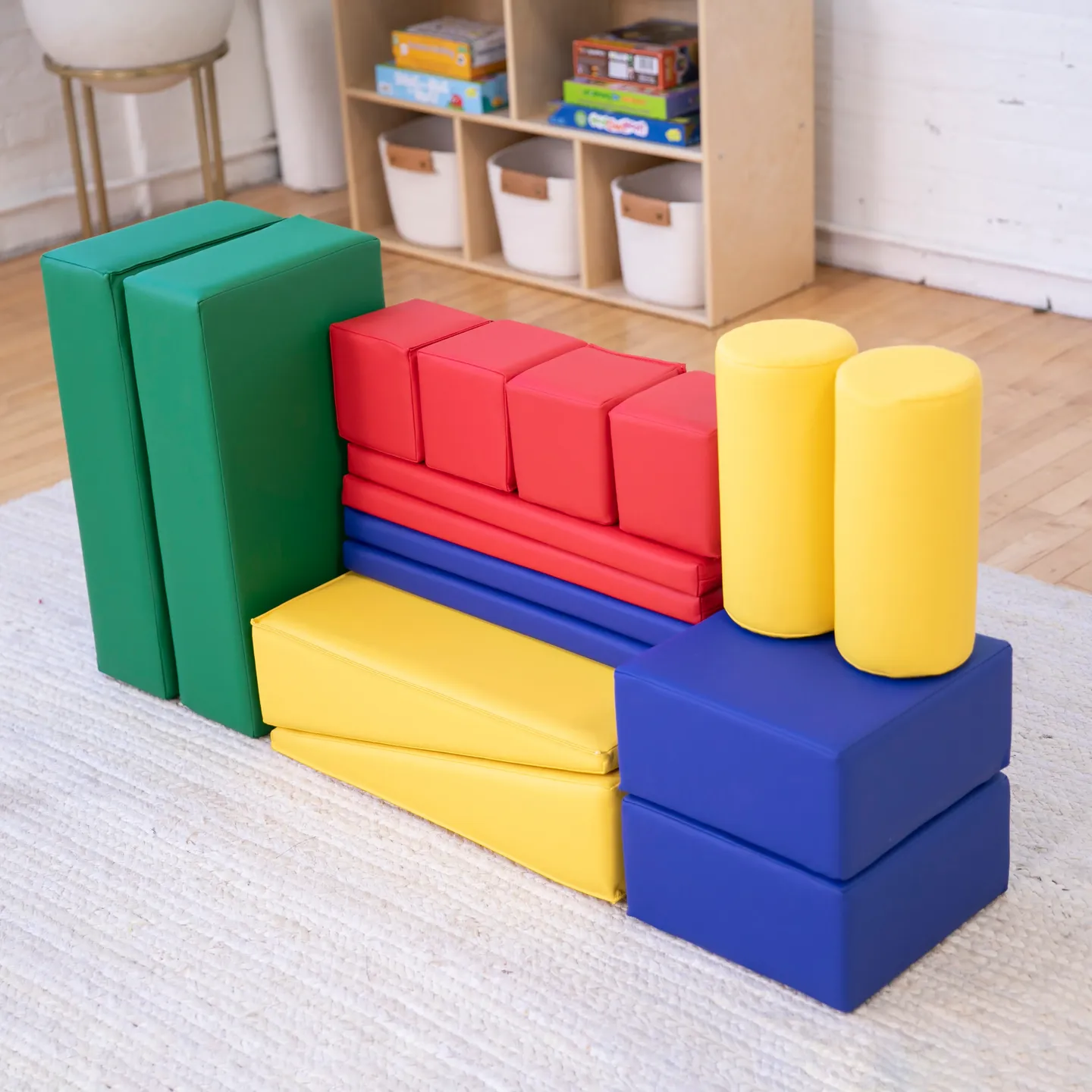
Giant Building Blocks can transform an ordinary room into a world of imagination, creativity, and adventure. For children who love constructing, pretending, and exploring new ideas, Giant Building Blocks offer an engaging way to turn simple materials into castles, houses, spaceships, bridges, and exciting pretend-play environments. Giant Building Blocks also encourage children to create their own stories and games, making them a valuable addition to an indoor play area. Whether children play independently, with siblings, or alongside parents, Giant Building Blocks provide endless opportunities for hands-on discovery and creative expression.
Why Imaginative Play Matters at Home
Imaginative play allows children to explore ideas, emotions, relationships, and everyday experiences through pretend situations. At home, children can create their own play scenarios without needing complicated equipment or structured activities. Construction toys are particularly useful because they give children physical materials that can become almost anything they imagine.
Large building pieces encourage children to become designers, builders, storytellers, and problem-solvers. A simple stack of blocks might become a tall apartment building, while another arrangement could represent a fire station or magical kingdom. This flexibility makes open-ended construction play different from toys that have only one intended purpose.
Encouraging Independent Creativity
One of the greatest advantages of open-ended building toys is that children can decide what to create. There are no strict rules about whether a structure needs to represent a particular object. Children can experiment with different designs and change their creations whenever inspiration strikes.
Giant Building Blocks encourage this independence because children can choose their own projects and determine how they want to complete them. They learn to make decisions, test possibilities, and develop confidence in their creative abilities.
Creating an Imaginative Play Space
A dedicated play corner can make construction activities even more enjoyable. Parents can place building materials in an accessible storage container and provide enough floor space for children to construct larger designs. For more information about large building blocks for kids, explore their features, benefits, age suitability, and role in encouraging imaginative and educational play.
A comfortable indoor area can become a construction zone where children have freedom to experiment. Adding toy figures, stuffed animals, toy vehicles, blankets, or simple household props can expand the possibilities.
Build a Pretend House
Children often enjoy creating spaces that represent their everyday surroundings. They can build walls, rooms, entrances, and furniture using large construction pieces. Once the structure is finished, they can pretend to cook, sleep, shop, or welcome visitors.
Giant Building Blocks are useful for this activity because their larger format makes structures easier for children to see and interact with. The completed creation can become the setting for an extended pretend-play story.
Create a Magical Castle
A castle-building project can introduce children to fantasy adventures. They can create towers, gates, walls, bridges, and secret rooms before inventing characters and stories.
Children might pretend to be knights, explorers, kings, queens, wizards, or friendly dragons. Giant Building Blocks give them a physical environment around which they can develop these stories.
Building Stories Through Construction
Construction and storytelling naturally complement one another. Instead of simply stacking pieces, children can think about why a structure exists and who might use it.
For example, a child could build a rescue station and imagine helping people during an emergency. Another child might construct a space station and create an adventure involving astronauts exploring distant planets.
Turning Blocks Into Different Objects
The same pieces can represent completely different things depending on the story. A row of blocks might become a train, a bridge, a road, or a fence. This symbolic thinking is an important part of imaginative development.
Giant Building Blocks allow children to change their environment as their stories develop. If a story suddenly requires a hospital, airport, or mountain, children can simply rebuild their structures to match the new idea.
Developmental Benefits of Construction Play
Imaginative construction activities can support multiple areas of childhood development. While children are having fun, they are also practicing important physical, cognitive, and social skills.
Problem-Solving and Critical Thinking
Building structures requires children to think about stability, size, shape, and positioning. If a tower collapses, children can investigate what happened and try a different arrangement.
Giant Building Blocks provide opportunities for trial-and-error learning. Children discover that changing the foundation, moving a piece, or reducing the height can make a structure stronger. These experiences introduce basic engineering concepts through natural play.
Fine and Gross Motor Development
Moving, lifting, positioning, stacking, and connecting building pieces can support physical coordination. Children practice controlling their movements while handling construction materials.
Large pieces can also encourage children to move around their play space as they collect materials and construct larger structures. This creates an active alternative to sedentary entertainment.
Cooperative Play With Family and Friends
Imaginative building does not have to happen alone. Parents, siblings, and friends can join children in collaborative projects. Working together teaches children how to communicate, share materials, listen to suggestions, and negotiate decisions.
Giant Building Blocks can make group projects particularly exciting because multiple children can contribute to the same large structure. One child might create the walls while another builds a bridge or tower.
Parent-Child Building Challenges
Parents can make construction play more engaging by introducing simple challenges. Ask children to build the tallest tower they can, create a bridge for toy cars, or design a home for stuffed animals.
The goal should not always be competition. Open-ended challenges can simply encourage children to think about different construction techniques and explore new possibilities.
Indoor Themes for Giant Building Blocks
Themed play can give children new inspiration when they are unsure what to build. Parents can introduce a different theme each day or allow children to choose their favorite.
A transportation theme might involve creating garages, roads, airports, and train stations. An animal theme could include shelters, farms, zoos, and veterinary clinics. A fantasy theme might involve castles, towers, magical villages, and secret tunnels.
Giant Building Blocks work well with these themes because children can adapt the same construction pieces to many different scenarios.
Making Cleanup Part of the Routine
Construction play can produce a large collection of pieces across the floor, but cleanup does not have to end the fun. Parents can make tidying part of the imaginative experience.
Children could pretend they are construction workers returning equipment to a warehouse. Alternatively, they can sort pieces according to size, shape, or color before putting them away.
Teaching children to organize their building materials also helps them develop responsibility. A simple storage system makes it easier to find the right pieces during the next play session.
Safety Tips for Indoor Building
Parents should choose building materials appropriate for their child's age and developmental stage. Always follow the manufacturer's recommended age range and safety instructions.
Children should have enough open space to build safely, especially when constructing larger structures. Keep blocks away from stairs, fragile objects, heaters, and other hazards. Younger children may also require closer supervision depending on the size and design of the pieces.
Giant Building Blocks should be inspected regularly for cracks, sharp edges, loose components, or other damage. Safe storage can help keep construction materials in good condition between play sessions.
How to Keep Imaginative Play Fresh
Children may eventually become less interested in an activity if they repeat exactly the same project every day. Fortunately, construction materials can be refreshed easily by introducing new challenges and themes.
Instead of always building towers, encourage children to create a miniature town, obstacle course, animal habitat, restaurant, space station, or adventure camp. Adding toy characters and storytelling prompts can also make familiar structures feel new.
Giant Building Blocks offer flexibility that allows children to continually reinvent their play environment. The possibilities can grow as their imagination and construction skills develop.
Frequently Asked Questions
1. What are Giant Building Blocks used for?
Giant Building Blocks can be used for imaginative construction, pretend play, storytelling, and creative indoor activities. Children can create structures such as houses, castles, towers, bridges, garages, and imaginary worlds.
2. Are large building blocks good for imaginative play?
Yes. Large construction pieces are excellent for open-ended play because children can decide what they want to create. They can use the same materials for different stories, characters, and environments.
3. What skills can children develop through building?
Construction activities can support spatial awareness, coordination, creativity, problem-solving, planning, communication, and cooperation. Children can also develop persistence by rebuilding structures when their first attempts do not work.
4. Can parents participate in building activities?
Absolutely. Parents can build alongside children, introduce creative challenges, ask questions, and participate in pretend stories. The best approach is to encourage the child's ideas rather than taking complete control of the project.
5. How can I make building activities more interesting at home?
Introduce different themes, storytelling challenges, pretend characters, and construction goals. Children can build a city one day and a fantasy castle the next. Changing the story around the construction materials keeps play fresh.
Conclusion
Imaginative play at home gives children valuable opportunities to create, explore, and express themselves. Construction activities are especially powerful because they combine hands-on movement with storytelling and problem-solving. Giant Building Blocks provide children with flexible materials that can become almost anything their imagination can design.
From pretend houses and magical castles to rescue stations and futuristic space centers, there are countless possibilities for creative indoor play. By providing a safe play area, encouraging open-ended ideas, and participating when appropriate, parents can help children get more value from construction activities.
Giant Building Blocks are more than simple building pieces. They can become the foundation for stories, adventures, learning experiences, and family memories. With creativity and encouragement, children can turn a small play area into an entire world built entirely from their own imagination.